



























About Killer Sudoku
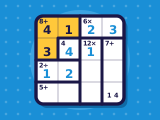
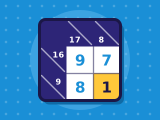
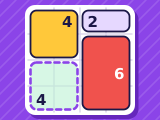
Killer Sudoku, sometimes called sum sudoku, keeps every rule of the classic puzzle but takes away the given digits. Instead, the grid is split into small dashed cages, each with a number in its corner: the digits inside add up to that number, and none may repeat within the cage. The first steps come from cages with only one way to make their sum, such as a two-square 3 (1 and 2) or 17 (8 and 9), and from the rule of 45: every row, column and box adds up to 45. Easy days use cages of two or three squares, medium days up to four and hard days up to five, and every grid can be solved by logic alone.
How to play Killer Sudoku
- Fill every square with a digit from 1 to 9 so that every row, every column and every 3 × 3 box holds each digit once, as in sudoku. No digits are given at the start.
- The dashed outlines are cages. The small number in a cage’s corner is the sum of its digits, and no digit may appear twice inside one cage.
- Select a square, then tap the number pad or type a digit. Notes mode adds pencil marks; the line above the grid shows the selected cage’s sum and the digits placed in it.
- Easy days have cages of two or three squares, medium days up to four and hard days up to five. Every grid has one solution, found by logic alone. Fastest time wins; fewer entries break ties.
Tips & strategy
- Learn the sums with one answer: two squares making 3, 4, 16 or 17, and three squares making 6, 7, 23 or 24, each take a single set of digits.
- Use the rule of 45. Add up the cages lying wholly inside a row, column or box; whatever is missing from 45 belongs to the squares left over.
- Switch on Show cage combinations to list the digit sets the selected cage can still hold.
- Once digits go in, scan as in sudoku: every row, column and box needs each digit once.
Killer Sudoku: questions and answers
Why are there no numbers in the grid at the start?
The cage sums are the clues. A rare one-square cage shows its digit, because its sum is the digit itself.
Can a digit repeat inside a cage?
No. The digits of a cage are all different, and they follow the usual row, column and box rules as well.
How is Killer Sudoku ranked?
By time, fastest first; fewer entries break ties. Only a member’s first solve of the day counts for the leaderboard.